How the credit gets from the farm to your bill
Nothing changes at your home. The farm feeds the grid; your utility counts your share and takes it off your bill.
How the credit works
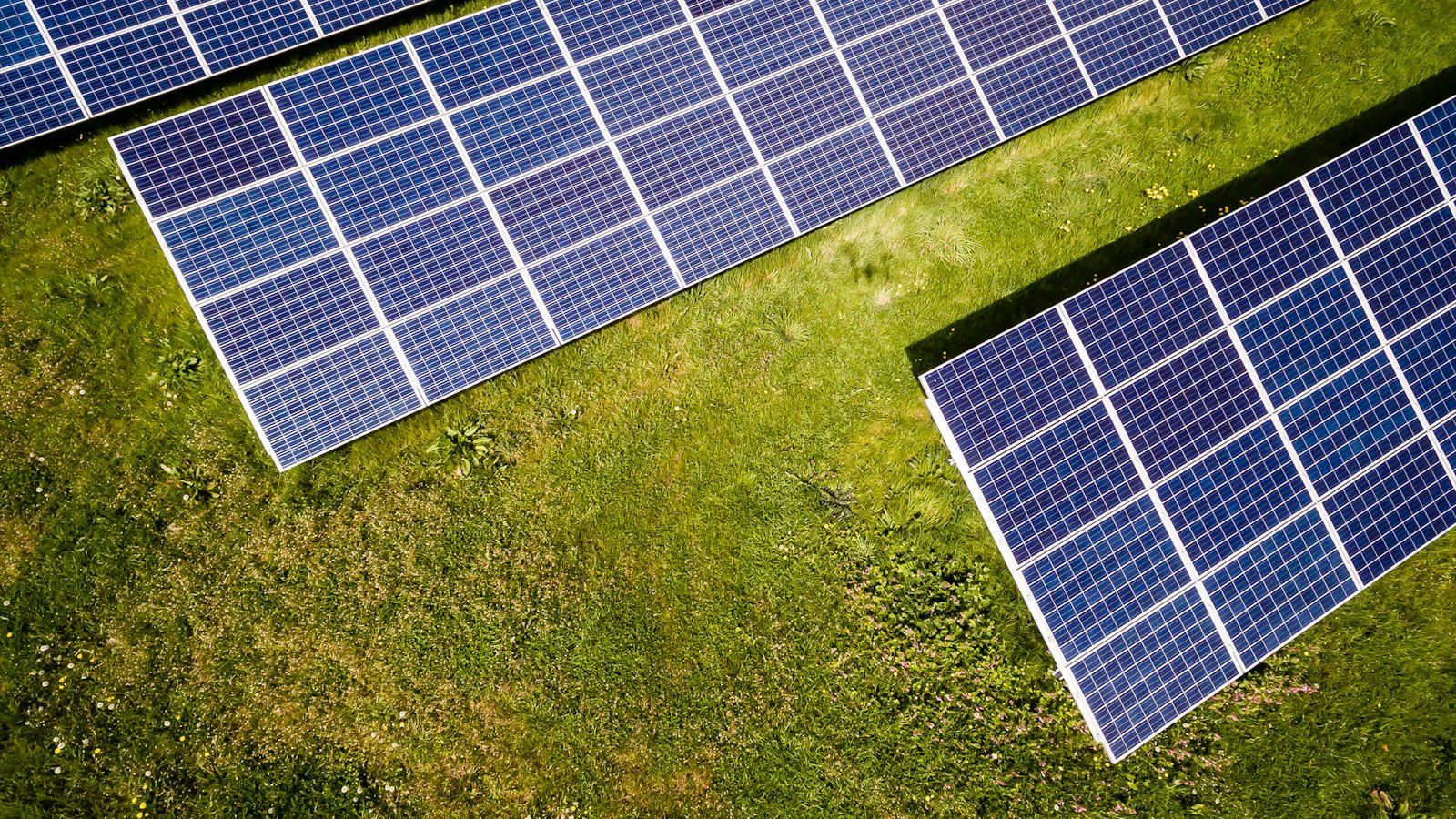
A developer builds a solar farm somewhere in your utility's territory and sells subscriptions to households. The farm's electricity goes onto the grid, the same grid that already serves your home. Your utility measures your share of what the farm produced each month and takes it off your bill as a line labeled something like "community solar credit."
You pay the farm for that share at a discount, so the credit is always worth more than what you pay. The difference is your savings. Credits rise in summer and fall in winter with the sun, and so does your subscription charge, which keeps the discount steady through the year.
Your utility does not change. BGE, Pepco, Delmarva Power or Potomac Edison still delivers your power, reads your meter, sends your bill and fixes outages. The only new things are the credit on that bill and a subscription charge, which some organizations place on the utility bill and others send on a separate statement.
What community solar is not
It is not rooftop solar. There are no panels, no loan or lease, no contractor on your roof and no permit. If someone wants to look at your roof, they are selling a different product.
It is not switching your electricity supplier. A third-party supplier changes the "supply" price on your bill and can raise it later. Community solar adds a credit and leaves your supplier alone. Door-to-door supply offers in Maryland have a long record of complaints, so be careful when a stranger with a tablet asks to see your bill.
It is not free electricity. There is a credit on your bill and a discounted charge for it. Any offer built around the words "free power" is describing something other than Maryland's program.
Who can join in Maryland
Anyone with an electric account in their name with BGE, Pepco, Delmarva Power or Potomac Edison. That includes renters, apartments, condos and houses. There is no landlord approval, no roof and no HOA question, because nothing happens at your address. If you move within the same utility's territory, your subscription can usually move with you.
SMECO, the electric co-ops and the municipal utilities are not in the state program yet. Farms also fill up, so in some territories there is a short wait for the next one to open.
The income-qualified discount
Maryland reserves part of every community solar farm for low- and moderate-income households and offers a larger discount for them, often around 25%. If anyone in your home receives OHEP, SNAP, Medicaid or WIC, you usually qualify. Many working families qualify on income alone.
You show proof once, at sign-up, with a benefit letter or income documents. Being behind on your bill does not disqualify you. If you are behind, start with bill help so the balance is handled, then add community solar to lower what comes next.
Where to go next
Every organization selling community solar in Maryland must be registered with the Public Service Commission, so the official list is the right first stop. Utility Advisor receives no compensation for any referral on this page.
Direct route
The Maryland PSC page
Program rules and the registered subscriber organizations, from the regulator.
Open the PSC pageFull guide
How to join, step by step
Three ways to sign up, what to read before you sign, and the questions people ask us.
Community solar guide60 seconds
Savings Finder
Six questions, and you see every Maryland program your household likely qualifies for.
Find my programsQuick answers
Does anything get installed at my home?
Will my utility change?
Does it cost anything to join?
Can renters join community solar?
Still unsure? Call (443) 222-1221 and a program volunteer will walk through it with you. Free, no sales pitch.